AI in Wholesale
Case Study: Enhancing e-commerce experiences through AI for a leading U.S. consumer goods wholesaler
Objectives
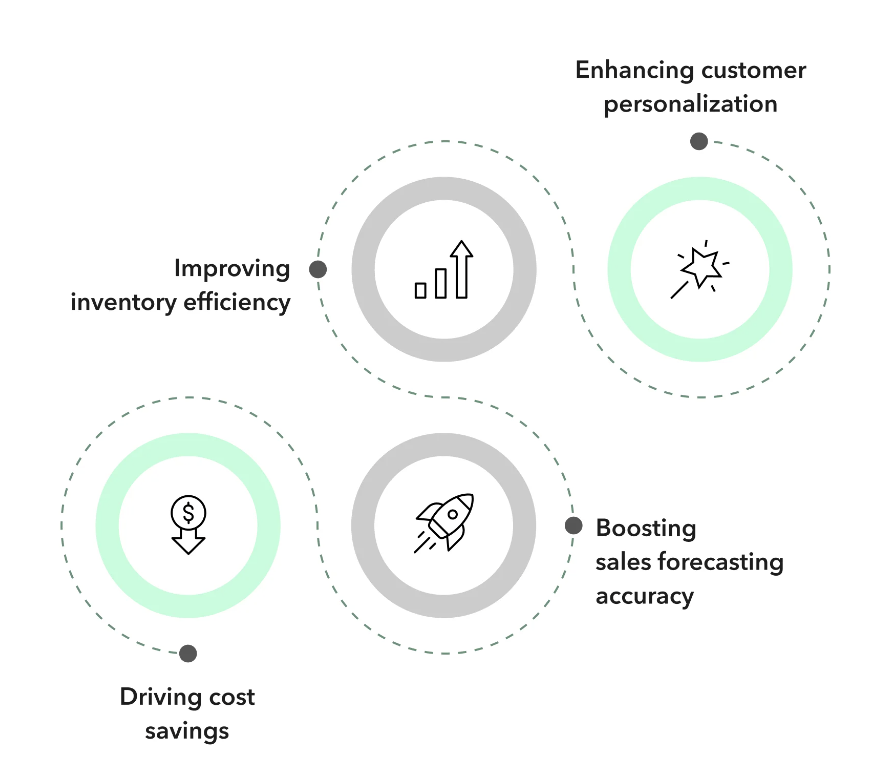
- Enhance personalization: To deliver tailored product recommendations that align with individual customer preferences and purchasing behaviours, improving the overall shopping experience.
- Improve search functionality: To refine search results and make product discovery more intuitive and effective for users, reducing frustration and dissatisfaction.
- Optimize inventory management: To use predictive analytics for better inventory accuracy, ensuring high-demand products are adequately stocked and available for customers.
AI Implementation Strategies
Outcomes
- Increased orders and customer loyalty: The wholesaler saw a 10% increase in orders and a 1.5x increase in customer loyalty, evidencing the success of personalized shopping experiences.
- Enhanced customer experience: The wholesaler significantly improved customer satisfaction and engagement by offering curated product listings and dynamic search results.
- Optimized inventory management: The predictive analytics used for inventory management increased accuracy, leading to better product availability and a 5% increase in order rates.
The leading U.S. consumer goods wholesaler's strategic use of AI has enhanced the e-commerce shopping experience for its customers and optimized operational efficiencies. By focusing on personalization, intuitive search functionality, and predictive inventory management, the wholesaler has established a new benchmark for the consumer goods wholesale industry.
This case study underscores the transformative potential of AI in wholesale, offering valuable insights for businesses aiming to leverage technology to meet evolving customer expectations and drive significant business outcomes.
AI Use Cases in the Wholesale Industry
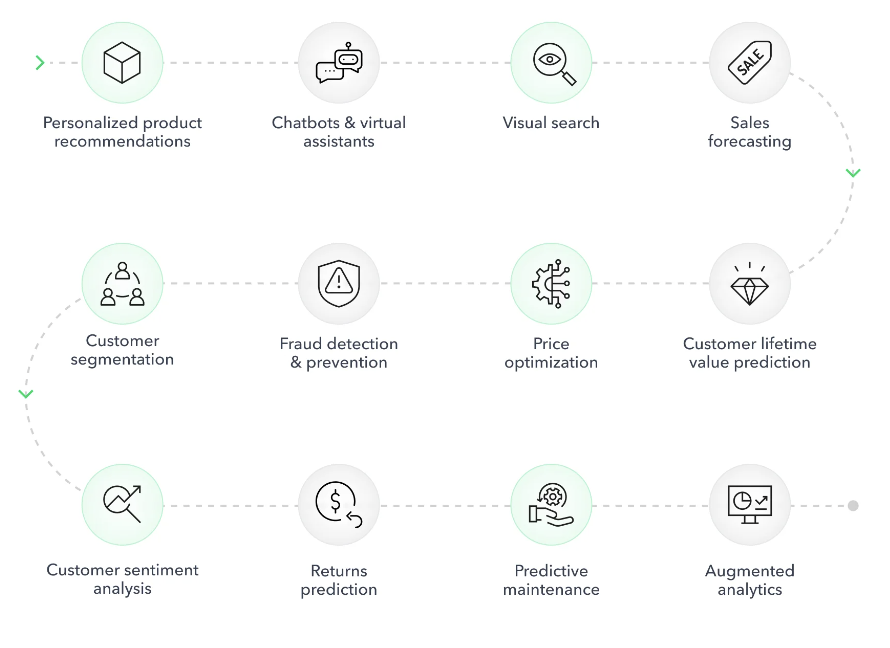
Thanks to artificial intelligence (AI) integration, the wholesale industry is witnessing a paradigm shift. This technology is automating mundane tasks and reshaping wholesale operations, customer interactions, and business models. Below, They explore significant AI use cases in wholesale, highlighting their impact and benefits.
1. Personalized Product Recommendations
AI systems analyse customer data, such as purchase history, browsing behaviour, and preferences, to offer personalized product recommendations. This enhances the shopping experience by making it more relevant and engaging. By closely aligning offerings with individual customer needs, it also increases sales and customer loyalty.
2. Chatbots and Virtual Assistants
Wholesalers leverage AI-powered chatbots and virtual assistants to provide round-the-clock customer service, handle inquiries, offer product recommendations, and assist with purchases. These tools significantly improve customer engagement and operational efficiency by automating customer support and freeing human resources for more complex tasks.
3. Visual Search
Visual search technology allows customers to upload images and find similar or related products in the wholesaler's inventory. This innovative approach simplifies the product discovery process. It is particularly beneficial for customers who may not have the exact words to describe what they're looking for, thereby improving user experience and potentially increasing sales.
4. Sales Forecasting
AI enhances sales forecasting by analysing vast amounts of data to predict future sales trends. Having such a capability allows wholesalers to optimize inventory levels, reduce stockouts or overstocking, make data-driven decisions regarding promotions and pricing strategies, and improve profitability and customer satisfaction.
5. Customer Segmentation
By employing machine learning algorithms to analyse customer behaviour and demographic data, wholesalers can segment their customer base into distinct groups. This segmentation enables targeted marketing efforts, personalized product offerings, personalized experiences, and tailored promotions, significantly increasing marketing effectiveness and customer engagement.
6. Suspicious Activity Detection and Prevention
AI systems are adept at identifying patterns and anomalies in transaction data that may indicate suspicious activity. By implementing AI-driven fraud detection, wholesalers can enhance security, reduce losses due to fraudulent transactions, and maintain customer trust by ensuring safe and secure shopping environments.
7. In-store Analytics
AI-powered in-store analytics provide wholesalers with valuable insights into customer behaviour, preferences, and traffic patterns within physical stores. These insights can inform store layouts, product placements, and staffing decisions, ultimately improving customer experiences and maximizing sales opportunities.
8. Dynamic Pricing
AI enables dynamic pricing strategies by analysing various factors such as demand, competitor prices, and inventory levels. Wholesalers can adjust prices in real-time to maximize profitability, remain competitive, and respond to market fluctuations and consumer behaviour changes.
In conclusion, the adoption of AI in the wholesale industry drives operational efficiencies, enhances customer experiences, and increases profitability. Wholesalers leveraging AI technologies are well-positioned to stay ahead in a competitive market and meet evolving customer demands.